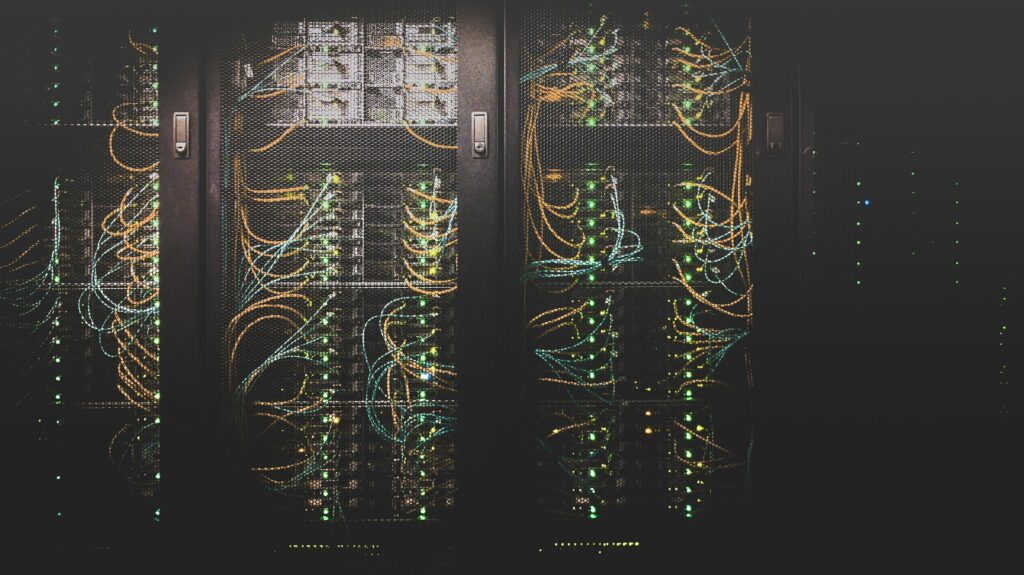
What are data centres?
Data centres are facilities that house the computing hardware (servers) needed to run the ever-growing network of online and digital systems that we rely on, such as websites, apps, IT systems, and artificial intelligence (AI). As these servers are crucial for the continuity of such systems, in addition to the servers that operate these, they also include back-up infrastructure such as ventilation, fire suppression, and physical security systems.
Data centres consume a huge amount of energy. This means that they can increase strain on the electricity grid where they are built. In some places, data centres also use significant quantities of water for cooling the servers, placing another demand on local supplies.
Where should they go?
Data centres often have specific locational requirements that determine where they are suitable. This means there is a finite number of sites that will be optimal for such development. For example, cloud data centres may need physical proximity to other cloud data centres, or the businesses they support. Other types of data centre may be less dependent on proximity to businesses or other data centres, or may have more flexible locational requirements.
Their high demand for power means that some developers are considering co-locating data centres with energy generation infrastructure, such as solar panels, or battery storage to feed their energy appetite. As a result, locations close to grid connection points may be most desirable.
Until the reordering of the grid connection queue in June 2025, there was huge demand for sites with potential for Battery Energy Storage System (BESS) development. The “gate check 2” process then made many sites that previously had BESS potentially unviable overnight. Some of these locations may now find they have a second wind with potential for data centres, given the similarity of site requirements.
The cost of cooling data centres means that naturally colder climates may also be sought as suitable locations. These are more likely to be more remote areas, but could be suitable where the speed of a connection is less of a consideration. Given the heat generated by data centres, there may also be opportunities to co-locate these nearby development that has a high demand for heat (e.g. residential), where other factors allow.
What are the Planning considerations?
Data centres are recognised as nationally significant infrastructure by both the UK and Scottish Government. This means that the need for the development is already established. However, the developments still need to obtain planning permission in the regular way, and are subject to other provisions and policies of the development plan.
Applications for planning permission involving data centres are likely to consider any noise impact created by these (particularly where large scale ventilation is proposed close to sensitive receptors). Given the locational requirements above, there may be times these are proposed in designated areas, such as green belts. These are likely to be assessed in as any development would, though the proposed use as a data centre may hold more weight in the planning balance than would be afforded another – there are already examples of this in appeal decisions in England.
Data centres are low-employment generators, and therefore low-traffic generators. However, they have the potential to support job and economic growth off-site through the function they provide, and this will be taken into consideration.
What next?
There is a global race to win the investment being created by the emerging AI industry. This has been recognised at a government level, not least through the recognition of data centres as national infrastructure mentioned above.
The AI Opportunities Action Plan was published in January 2025 and set out the UK government’s approach to nurturing the British AI industry and attracting foreign AI investment. The Action Plan announced the AI Energy Council to identify clean energy solutions to meet the energy demands of data centres and facilitate investment in these. The Action Plan suggests this may include Small Modular Reactors, which are currently untested in the UK planning system.
The UK government has also consulted on a set of AI Growth Zones (AIGZs), with local authorities and developers able to make bids for locations to be designated as focus areas for AI investment – including businesses and data centres. These will be recognised as areas available for development of data centres, and will have a favourable planning environment from the relevant local planning authorities. The government is particularly keen to consider deindustrialised parts of the country that have access to at least 500MW of power by 2030, sufficient water supplies, at least 100 acres of land, and reliable digital connectivity (fibre optic and mobile network). Planning authorities may consider combining AIGZs with other designations such as green freeports, or applying planning powers such as Masterplan Consent Areas to expedite the delivery of development and create an attractive investment landscape.
The first round of bids for AIGZs closed in May 2025, but the application process remains open-ended and new bids are still being accepted.
How can G+S assist?
Our Planning & Development team can offer advice on potential sites for data centres and planning consultancy services in processing a planning application. If you wish to discuss data centres and the planning considerations, or a potential development opportunity, in more detail, please contact a member of our team at planning@g-s.co.uk.